
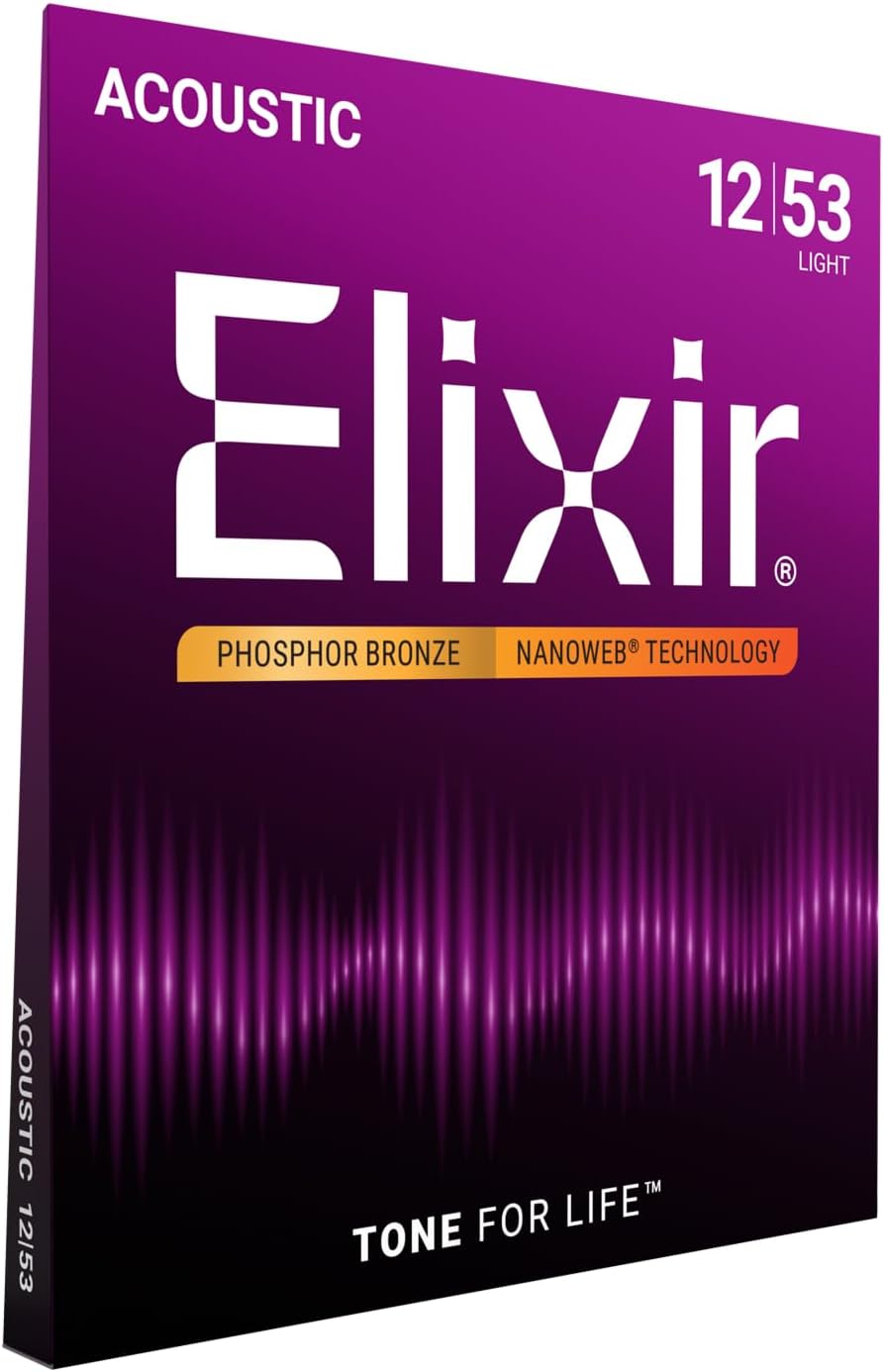
The best acoustic guitar strings for most players are light-gauge phosphor bronze sets from Elixir, D’Addario or Ernie Ball. A 12-53 phosphor bronze set is the safe middle ground of the acoustic world: warm enough for fingerpicking, bright enough for strumming, and comfortable enough for a long evening of practice. Everything that follows is really about working out when to step away from that default.
Acoustic strings matter more than they get credit for. They are the only part of the instrument you replace regularly, and they shape both how the guitar feels under your fingers and how it sounds to everyone else. Fit the wrong set and even a lovely guitar can feel stiff and dull. Fit the right set and a modest guitar opens up. Here is what actually matters when you are shopping for the best acoustic guitar strings.
Phosphor bronze vs 80/20 bronze
The two big families of acoustic strings are both bronze alloys, and the difference comes down to how much zinc is mixed with the copper.
Phosphor bronze strings are roughly 92 percent copper and 8 percent tin, with a trace of phosphorus added. They are the warmer, darker option. The tone is balanced and smooth, with the bass notes rounded off rather than harsh. They also age fairly gracefully, losing their edge gradually instead of all at once. This is the default for most players, and it suits fingerpickers and singer-songwriters particularly well.
80/20 bronze strings are 80 percent copper and 20 percent zinc. They sound brighter and livelier straight out of the packet, with more zing on the top strings and a sharper attack. That sparkle is lovely when the strings are fresh, but it fades quicker, and 80/20 sets tend to oxidise and go dull faster than phosphor bronze, especially if your hands sweat. They are a good pick if you want maximum brightness and do not mind changing strings a little more often.
For a first decision, phosphor bronze is the safe bet. Reach for 80/20 when you know you want more cut and shimmer.
Coated vs uncoated
Coated strings carry a thin polymer layer over the winding that keeps sweat and grime out. Elixir made this approach famous, and it works: the coating slows corrosion dramatically, so the strings keep their tone for several times longer than a bare set.
The trade-off is that a coated set usually sounds a touch less lively than an uncoated one when both are brand new, and it costs more. Some players also say coated strings feel slightly slipperier under the fingers, but it is a small difference.
Uncoated strings are the traditional choice. They are cheaper, they sound full and natural from day one, and they are what most recordings are made with. The downside is lifespan. If you play every day or your hands sweat, an uncoated set can start to sound dead within a few weeks.
If you hate changing strings and want them to last, buy coated. If you want the truest tone and do not mind swapping more often, buy uncoated. There is no wrong answer, only a preference.
What gauge to choose
Gauge is the thickness of the strings, usually quoted by the diameter of the high E string in thousandths of an inch. A 12-53 set runs from a 0.012 inch high E down to a 0.053 inch low E. Thicker strings are louder and fuller but harder to press down; thinner strings are easier on the fingers but quieter.
Light, or 12-53, is the standard. It is what most guitars ship with from the factory and the sweet spot between tone and playability. If you are not sure, buy light gauge.
Extra-light, or 11-52, is the beginner’s friend. The strings bend and fret more easily, which is a genuine help while your fingertips are still building up. The sound is slightly thinner and the volume a shade lower, but for learning, comfort wins. Many beginners do far better starting here and moving up later.
Medium, or 13-56, is the heavy option. It puts more tension on the guitar, which means more volume, more low end, and a stiffer feel. Medium gauge suits players who strum hard or tune down, and it is popular with bluegrass players for that reason. It is also the hardest on your hands, so it is worth building up to rather than starting on.
Bear in mind that heavier strings pull harder on the neck, so changing gauges a lot may call for a small setup tweak.
The sets worth buying
You do not need a wall of options. Three brands cover almost everything a player needs.
Elixir is the name most people think of for coated strings, and for good reason. Their Nanoweb-coated phosphor bronze sets last noticeably longer than bare strings and still sound warm and full. If longevity is your priority and you would rather play than restring, this is the obvious choice.
D’Addario EJ16 is the reference set. It is a phosphor bronze 12-53 light gauge and it has been the baseline against which everything else is judged for decades. Neutral, consistent, and affordable, it is the ideal first set if you are unsure and the sensible default for everyday use.
Ernie Ball Earthwood phosphor bronze is the other great all-rounder. The tone is warm and slightly round, the price is fair, and the brand has a loyal following among players who like a slightly softer, more comfortable feel. As a light 12-53 set it sits happily alongside the other two.
Any of these three will serve you well. Pick Elixir for lifespan, D’Addario for a safe standard, and Ernie Ball for a warm, easy-playing alternative.
How acoustic strings age, and when to change them
Acoustic strings die from two things: the oils and sweat from your fingers working into the winding, and the air slowly oxidising the metal from the outside in. The winding is the part that matters. A wound string is a thin core wire with a smaller wire coiled tightly around it, and once grime and moisture get down between those coils, the string stops vibrating cleanly as one piece. It still rings, but the top end goes first, then the bass turns dull and thumpy, and the whole guitar starts to sound like it is covered with a blanket.
You can hear the change before you can explain it. A fresh phosphor bronze set has a bell-like ring on the treble strings and a clear, defined bottom end. A dead set sounds flat and lifeless, the strings feel rough and slightly sticky along their length, and the colour of the metal shifts from gold to a darker, greyer shade, especially around the soundhole where your hand rests. If you run a fingernail down a wound string and it feels gritty rather than smooth, the winding is packed with dirt.
Playing hours are a rough guide. A hard strummer who sweats might lose an 80/20 set in two or three weeks, while a gentle fingerpicker with dry hands can get two or three months from the same type. Coated strings stretch that to three or four times longer, which is why regular gigging players often pay the extra. The honest test is always your ears and your fingertips, not the calendar. If the guitar sounds dull when you know the strings are not new, they are done, and no amount of tuning or new picks will bring the sparkle back.
There is a strange middle period worth knowing about. Some uncoated strings go dead in a way that sounds almost pleasant, a softer, warmer tone that some recording players actually like and will keep for a session. That is the exception, though, and most of the time a dead string just sounds tired.
Brand by brand: how the main sets really sound
Once you move past the three obvious names there is a decent spread of character to choose from, and knowing what each one does saves you buying blind.
Elixir offers two coatings, and they are not the same. Nanoweb is the thinner coating, and it is the one most players prefer because it feels closer to a bare string and still protects the winding. Polyweb is thicker, quieter on finger noise, and slightly darker in tone, which suits players who slide a lot or want a mellower sound. Elixir also makes an HD Light set, which is a 13-53 with a lighter B and high E, giving the bass weight of a heavier gauge with the bending comfort of lights. It is a clever set for players who want both. If you want to try the coated route without hunting around, best rated coated acoustic strings are the obvious starting point.
D’Addario’s range goes deeper than the EJ16. The EJ16 is the plain phosphor bronze you have probably seen a hundred times. The XT range is their coated line, with a treatment that is meant to feel and sound like an untreated string while lasting longer. The XS range adds a film coating on top of that for maximum life. D’Addario also build their strings with a hex core and a process they call NY Steel, which is about consistency and tuning stability, and you can feel it in how evenly a fresh set settles in.
Martin strings carry a different flavour. Their SP sets are treated and aimed at gigging players, with a tone that sits slightly brighter and more forward than a classic phosphor bronze. The Marquis range is untreated and warmer, closer to the vintage sound. Martin’s Retro line uses monel rather than bronze, which is a nickel and copper alloy with a much drier, woodier, almost old-fashioned tone that jazz and folk players love because it lets the fundamental note through without a lot of sparkle on top.
John Pearse and Rotosound are the names to know if you want to try something with a little more personality. John Pearse phosphor bronze sets have a reputation for a warm, rich, slightly woody voice that suits acoustic blues and folk. Rotosound’s British-made acoustic sets are bright and punchy and cost a little less than the boutique brands, which makes them worth a look if you change strings often.
GHS, La Bella, and Ernie Ball’s aluminium bronze sit at the edges of this map. Aluminium bronze is loud, brash and very bright, and it is a love it or hate it sound. If you are happy with a safe, warm, all-round tone then stick with phosphor bronze from a big name. If you are chasing a particular character, the smaller makers are where the interesting options live.
Beyond bronze: monel, silk and steel, and treated sets
Bronze is not the only game in town, and the alternatives matter if your playing sits outside the mainstream.
Monel strings, used by Martin on their Retro line, are a nickel and copper alloy. They resist corrosion well, they feel smooth, and they have a dry, woody tone with a strong fundamental and a restrained top end. Acoustic blues and older folk styles suit them, and because they hold their pitch well they are popular with players who detune for slide work.
Silk and steel strings have a strand of silk wrapped around the core under the winding, which lowers the tension and softens the tone. They are gentle on the guitar and easy on the fingers, which makes them a good fit for a vintage instrument that you do not want to load with heavy tension, or for a player with sensitive hands. The trade-off is a quieter, softer voice with less bite.
Nickel bronze sits between bronze and monel. It is a nickel-plated bronze winding that sounds a little drier and more controlled than phosphor bronze, with less of the metallic zing, and it works well for players who record and want a tone that sits neatly in a mix.
There are also treated strings, which are not coated in a film but chemically treated to slow corrosion from the inside. The idea is a string that ages slowly while feeling completely natural under your fingers. They sit between a plain set and a coated set in both price and lifespan, and they are a good middle path if you do not like the feel of a coating.
Custom light, bluegrass and other gauge tweaks
The 11-52, 12-53 and 13-56 sets cover most playing, but there are a few specialist gauges worth knowing about.
Custom light, or 11-52, gives you a lighter overall set with slightly meatier bass strings, which keeps the low end from going thin while still letting you bend easily. It is a popular choice for players coming from electric who find a standard light set hard work.
Bluegrass sets, usually 12-56 or 13-56, are heavier at the bottom and lighter at the top. The thick bass strings drive the rhythm hard and give a big, punchy low end, while the lighter treble strings still bend. This is exactly what a bluegrass rhythm player needs to cut through a room full of instruments, and it is a genuinely different feel from a straight medium set.
Twelve-string sets are their own thing. The lower four pairs are tuned in octaves and the top two in unison, and the stringing order matters: the thin string of each octave pair usually sits below the thick one, so it takes the lighter picking contact. A twelve-string set that is strung in the wrong order will sound muddled, and getting the octave pairs back to front is one of the most common mistakes on these guitars.
If you fancy experimenting, change one gauge step at a time and live with it for a week before you judge. Jumping from nines on an electric straight to mediums on an acoustic is not a fair test of anything except how strong your fingers are, and it will usually just make you think heavy strings are unplayable.
What the best acoustic guitar strings cost in the UK
Acoustic string prices in the UK are fairly predictable, and knowing the ranges stops you overpaying.
Plain uncoated phosphor bronze sets from the big brands usually run from about six to ten pounds. If you want a set that is easy to find and hard to get wrong, best rated acoustic guitar strings in that range cover most players. Anything far below that is either a cheap import or a clearance line, and both can be a gamble on consistency. A set in this range is a perfectly good everyday string, and if you play a lot it is the sensible way to buy.
Coated sets cost more, typically eleven to eighteen pounds depending on the brand and the coating. Elixir sits at the top of that band, and the extra cost is really a prepayment for the lifespan. If you normally get three weeks from an uncoated set and three months from a coated one, the coated set is often cheaper per hour of playing.
Boutique and hand-wound sets can push past twenty pounds, and the small makers such as John Pearse and La Bella sit here. You are paying for a particular voice and, sometimes, for a small batch build, not for something magically more durable. Buy these when you know exactly what you want, not as a first experiment.
Multi-packs are the quiet bargain. Buying three or four sets at once often drops the per-set price noticeably, and if you have settled on a brand you like there is no reason to buy one at a time. Watch for the standard size packs rather than the slightly odd gauges, which are often the ones on permanent discount because nobody buys them.
Mistakes that kill a fresh set
Most of the ways a new set of strings dies early come down to how it was fitted, not to the strings themselves.
The first is over-stretching. A gentle pull at the twelfth fret, repeated a few times, settles a string without harming it. Yanking hard enough to feel the string fight back can damage the winding or the core, and the string will never hold tune reliably afterwards. Firm and repeated beats violent, every time. Fitting a set goes quicker with a best rated string winder, which spins the pegs and trims the loose ends in one tool.
The second is running your fingers up and down the winding with oily hands every time you pick the guitar up. Skin oils are the main enemy of string life, and if you eat chips and then play, you are shortening the life of the set by weeks. Wiping the strings down with a dry cloth after playing takes ten seconds and genuinely helps.
The third is changing gauge without a setup. If you move from lights to mediums and the guitar suddenly buzzes or feels hard to play, the strings are not at fault; the neck relief, action and intonation are now set up for the old gauge. A small truss rod adjustment and a check at the bridge bring it back, and skipping that step just creates a problem you will chase for weeks.
The fourth is leaving a set on a guitar for a year because it still holds tune. Holding tune is not the same as sounding good. A year old set can be perfectly in tune and still sound like it is being played through a wet blanket.
The fifth is buying whatever is cheapest for a guitar you actually care about. On a beater it does not matter. On a guitar you play every day, a few pounds more for a consistent, well-made set is money well spent, because you will hear the difference every single time you pick it up.
Recommended gear
These are solid acoustic string sets available on Amazon UK. Buying through these links supports this site at no extra cost to you.
Elixir acoustic guitar strings
D’Addario acoustic guitar strings
Ernie Ball acoustic guitar strings
Frequently asked questions
How often should I change my acoustic guitar strings?
That depends on how much you play and how much you sweat. A heavy player might change uncoated strings every few weeks, while a casual player can get a few months from a set. A good rule is to change them when they stop holding tune, feel rough or grimy, or lose their sparkle. Coated strings stretch that timeline considerably.
Are coated strings worth the extra money?
For most people, yes, if longevity matters to you. They cost more per set but last several times longer, so the cost per hour of playing is often lower, and you spend less time restringing. The only real downside is a marginally less lively tone when brand new, which most players stop noticing after a day or two.
What gauge is best for a beginner?
Extra-light, or 11-52. The lower tension makes chords and single notes easier to fret while your fingers are still getting strong. You can move up to the standard 12-53 once playing feels comfortable. Light 12-53 is also fine for beginners with decent hand strength, but if in doubt, start lighter.
Can I use electric guitar strings on an acoustic?
No. Electric strings are wound with nickel or steel and are designed to work with magnetic pickups, not to drive a wooden soundboard. On an acoustic they sound thin, quiet and characterless. Stick with bronze or phosphor bronze strings made specifically for acoustic guitars.
Do expensive strings sound better than cheap ones?
Not automatically, but consistency is where the money goes. A cheap set can be fine, and two sets from the same budget brand may sound noticeably different from each other because the tolerances are looser. A well-made set from a big name sounds the same every time you open a packet, which matters once you know the tone you want and do not want surprises. You are buying reliability as much as sound.
Is it worth trying different string brands?
Yes, and it is one of the cheapest upgrades in guitar playing. A set costs less than a lesson, and changing brand or material can change how the same guitar sounds more than many electronic tweaks. Work through one brand at a time, keep notes on what you liked, and you will quickly find the set that suits your hands and your guitar rather than guessing.
Should I use the same strings for fingerpicking and strumming?
Not necessarily. Fingerpickers often prefer phosphor bronze for its warm, even tone, and sometimes a lighter gauge so the strings respond to a soft touch. Strummers who hit hard often like 80/20 bronze for its brightness and a slightly heavier set so the strings do not flap under a strong hand. If you do both, a light phosphor bronze set is the sensible compromise.
If you are still choosing a guitar to go with those strings, our guitar comparison guide walks through the options side by side.
Disclosure: As an Amazon Associate, I earn from qualifying purchases made through links on this page, at no additional cost to you.