
Guitar action too high is a problem you can fix at home, and the job is done in three steps: check the neck relief first, then lower the bridge saddles, and finally sort out the nut height. Action is the gap between the strings and the tops of the frets. When that gap is too large the strings need more pressure to ring cleanly, bends and barre chords feel like hard work, and the guitar just plays stiff. The good news is that lowering it is mostly small, reversible adjustments you can make with a couple of inexpensive tools, and every step can be undone if you go slowly. This guide runs through the whole job in the right order, from measuring what is actually wrong to setting the height at the bridge and nut, so you finish with a guitar that plays comfortably without buzzing.
Diagnose the cause first: measure the neck relief
Before you turn a single screw, work out where the extra height is actually coming from. String height is the result of three things: the bow in the neck (called relief), the height of the bridge saddles, and the depth of the nut slots. If you guess and start adjusting the wrong one, you can make the guitar worse while fixing nothing.
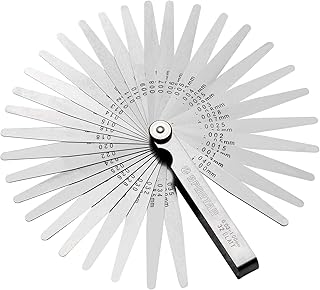
The first measurement to take is relief. Fret the low E string at the first fret (a capo makes this easier) and at the fret where the neck meets the body, which is usually around the 14th fret on many guitars. Now look at the gap between the string and the frets around the 7th or 8th fret. You want a tiny amount of daylight there, roughly 0.25 mm, about the thickness of a business card or a sheet of paper.
If the gap is much bigger than that, the neck is bowed forward with too much relief, and the strings sit high around the middle of the fretboard. If there is no gap at all, or the string touches the frets, the neck is back bowed or dead flat. This single measurement tells you whether the truss rod needs a tweak or whether you should leave it alone and move straight to the bridge. Taking it first is what stops you wasting an afternoon.
Fix 1: adjust the truss rod
The truss rod is a metal rod running inside the neck that works against the pull of the strings and controls how much the neck bows. Tightening it pulls the headstock back and reduces relief, which straightens the neck and lowers the strings around the middle frets. Loosening it does the opposite and adds a little bow.
The rule to remember is clockwise tightens and anti-clockwise loosens, and the golden rule is small turns. A quarter turn at a time is plenty. Retune after each turn, let the neck settle for a few minutes, then measure the relief again. Use the correct size hex or Allen key, which is often supplied with the guitar, and never force the rod. If it is very stiff, makes a clicking sound, or you have to lean on it, stop and take the guitar to a technician. A broken truss rod is an expensive repair.
If the relief measured in the previous step is already fine, skip this section entirely. The truss rod is not a height adjuster, and people ruin necks by cranking it to try and lower the action when the real problem is at the bridge.
Fix 2: lower the bridge saddles
Once the relief is right, the next place to look is the string height at the 12th fret, and most of that height is set at the bridge. On an electric guitar you lower the action either with the small height screws on each individual saddle, as on a Strat or Tele, or with the two bridge posts on a tune-o-matic. On an acoustic the saddle is usually one piece of bone or plastic sitting in a slot, and lowering it means sanding material off the bottom, which is a slower job.
For electrics, lower each saddle in small steps while keeping the curve of the fretboard in mind, so the middle strings are not sitting much higher than the outside strings. Lower a little, retune, play every fret up the neck, and listen for buzz. Your target is roughly 1.5 to 2 mm at the 12th fret on the high E and around 2 to 2.5 mm on the low E, but the real guide is how the guitar feels and whether it buzzes. If a string starts to buzz before you reach a comfortable height, raise that saddle a fraction and that is your floor for now.
Fix 3: sort out the nut height
The nut is the last piece and the one people most often forget. If the slots in the nut are too high, the strings sit high over the first few frets even when the action at the 12th fret is already low, and open chords feel harder to press than they should.
The test is simple. Fret a string at the third fret and look at the gap between that string and the top of the first fret. You want the tiniest sliver of space, barely visible. If there is a clear gap, the nut slots are too high.
Fixing this means deepening the slots with a set of nut files, and it is the most delicate step in the whole guide. Take one or two strokes per slot and recheck constantly, because if you file too far the open string will buzz and you are looking at replacing the nut. It is a cheap job for a technician and a fiddly one to get right by hand, so if you are not confident this is the one step where handing it over is sensible.
Recommended gear


Frequently asked questions
What is a good string height for a guitar?
A comfortable starting point is around 1.5 to 2 mm at the 12th fret on the high E string and roughly 2 to 2.5 mm on the low E. Acoustic players and heavy strummers often prefer the top of that range, while electric players who bend a lot lean lower. These are targets, not rules, and the right height is the lowest you can get without buzz.
Does high action mean my neck is bowed?
Not necessarily. A bowed neck with too much relief is one cause, but high saddles and high nut slots are just as common, and often two or three of these are wrong at once. That is why you measure the relief first and check the nut before assuming the truss rod needs moving.
Can I lower the action without a truss rod wrench?
Usually yes. If the relief measurement is already in the right range, the action is lowered at the bridge, and you only need the small hex key or screwdriver that fits the saddle height screws. The truss rod only needs adjusting when the neck itself is bowed, so a truss rod wrench is only essential if that measurement says so.
When should I leave it to a professional?
If the truss rod is stiff or clicking, if the neck looks twisted rather than evenly bowed, if the frets are worn or uneven, or if you have filed a nut slot too far, stop and take the guitar to a technician. A full setup is one of the cheapest improvements you can buy, and it is always cheaper than a repair.
If you are still deciding which guitar to buy, our [guitar comparison tool](/compare-guitars/) compares live asking and sold prices across models.
Disclosure: This article contains affiliate links. If you buy something through one of them, I may earn a small commission at no extra cost to you. I only recommend the tools described here.