
The lemon oil guitar fretboard question comes down to one rule: it conditions unfinished dark-wood boards only, and once or twice a year is all a healthy fretboard needs. If you play a rosewood, ebony, pau ferro or laurel board, a sparing wipe with the right oil keeps the wood hydrated, dark and smooth, and it stops the surface from drying out and splitting over time. If your fretboard is maple with a shiny clear finish, put the bottle down, because you do not oil lacquer. The confusion usually comes from the name, since most products sold as lemon oil contain no lemon at all. They are lemon-scented mineral oil, and that is exactly what you want. The real danger is reaching for the wrong liquid from the kitchen, so this guide covers which boards need oil, how to apply it, how much is too much, and what you should actually expect to see and feel.
Which fretboards need lemon oil
Dark, unfinished woods are the ones that benefit. Rosewood is the classic example, and it is what most players oil. Ebony and pau ferro behave the same way, as do the more budget-friendly laurel and some ovangkol boards. These woods are naturally oily when new, but they dry out with time, temperature changes and playing, and once dry they can shrink, crack or start to look pale and grey. A light conditioning oil replaces some of that lost moisture and keeps the board looking rich.
The key word is unfinished. The lemon oil fretboard question really comes down to one thing: is your board sealed or not. Fretboards like rosewood are left as bare wood with no protective coating, which is exactly why they need a little help now and then. Lacquered maple is the opposite. Almost every maple fretboard is sealed under a clear finish, so the oil never touches wood, it just sits on top of the lacquer and smears. Lemon oil will not soak in and it will not do any good; it can actually leave a greasy film that attracts dust and grime into the gaps where your frets meet the board. If a fretboard looks glossy and sealed, treat it as finished and clean it with a lightly damp cloth instead.
How to apply lemon oil correctly
The method matters more than the product, and every lemon oil guitar fretboard job starts the same way. Start with a clean board. Wipe the fretboard down with a dry cloth to remove surface dust, and if it is very grimy, use a fretboard cleaner or a barely damp cloth first and let the wood dry. You only want oil on clean, dry wood.
Then use a tiny amount. A few drops on a soft cloth is enough for a whole fretboard, so do not pour it on. Rub it into the wood along the grain, working up and down the neck one section at a time. Let it sit for a minute or two so the wood can absorb what it needs, then wipe every last trace of excess off with a clean, dry cloth. The finished board should feel dry to the touch, not slick or wet. Any oil left sitting on the surface is doing nothing useful and will collect dirt, so the wipe-off step is not optional. String changes are the natural time to do this, since the strings are already off and you can reach the whole board without catching them.
How often is too often
Once or twice a year is the sweet spot for most guitars, and many players oil even less than that. The mistake people make is treating it like a polish and doing it every month, or every string change. More is not better here. Over-oiling saturates the wood and can leave the board feeling permanently greasy, it can lift built-up grime and push it into the grain, and in the worst case it can soften the wood or creep into the fret slots and affect the fit of the frets. A dry, healthy rosewood board does not need rescuing every few weeks. If the board looks fine, it is fine. Let the wood tell you: a pale, dry, thirsty-looking board wants oil, while a dark, smooth, healthy board does not.
What to expect before and after
Before you oil, a dry fretboard tends to look a little faded and feel rough under the fingers, sometimes with faint cracks running along the grain, especially around the first few frets where you play most. That is the wood asking for attention.
After a correct application you should notice three things. The colour deepens and the board looks richer and darker, almost like a newly polished piece of furniture. The surface feels smoother and slightly less dry, which makes bending and vibrato a touch easier. And the board has a thin barrier against the moisture from your hands and the air, which slows down future drying and splitting. What you should not expect is a magic fix. Lemon oil will not repair deep cracks, it will not level worn finger grooves, and it will not make a cheap board play like an expensive one. It is maintenance, not restoration. If the board looks noticeably darker and feels clean and dry to the touch when you are done, you have done it right.
Lemon oil guitar fretboard: which products actually work
Walk into any guitar shop and you will find a shelf of bottles, all claiming to do the same thing. Most of them do, because most of them are the same base ingredient with a different label. What matters is that the product is a light mineral-oil based conditioner rather than a food oil or a polish, and that it is sold for fretboards rather than furniture.
Dunlop 65 Lemon Oil is the one most players start with, and it has been around for decades. It is a light mineral oil with a lemon scent, it soaks in quickly, and it does not leave a gummy film if you wipe off the excess. MusicNomad F-ONE is a similar idea with a slightly thinner feel, and it is popular with techs for how cleanly it leaves the board. D’Addario, Fender, Gibson and Ernie Ball all sell their own versions, and any of them will work if you use them sparingly.
A bottle of best rated fretboard conditioner costs less than a set of strings and lasts years, because a whole guitar takes only a few drops.
The one thing to read on the label is whether the product is meant for bare wood. Some spray-on cleaners combine a cleaner and a conditioner, and while convenient, they often contain solvents that are fine on a finished board but not ideal on bare rosewood. If the bottle says cleaner, use it to clean; if it says conditioner, use it to condition. That way you always know what is on the board.
Lemon oil vs other fretboard oils
Lemon oil gets all the attention, but it is not the only option, and knowing the alternatives helps you pick the right one.
Mineral oil is the plain version of the same thing. It is odourless, cheap and stable, and many players use nothing else. If you dislike the lemon smell, plain mineral oil does the job.
Bore oil is a traditional choice borrowed from woodwind instruments. It is slightly thicker and darker than lemon oil and soaks in well, and some players prefer it for very dry ebony. A small bottle of best rated bore oil lasts a lifetime.
Tung oil and linseed oil are the ones to avoid. These are hardening oils, used to build a finish on bare wood, and they cure to a solid film. On a fretboard they would seal the frets in and make future work a nightmare. They are for making furniture, not for maintaining a playing surface.
Food oils, including olive, vegetable, sunflower and baby oil, are the other big no. They go rancid, they polymerise into a sticky film, and they are very hard to remove once they have soaked in. A guitar treated with olive oil smells stale after a few months and feels tacky forever.
Does lemon oil go off, and how long does a bottle last?
A bottle of fretboard oil lasts for years if it is kept closed and out of direct sun, because mineral oil is stable and does not spoil the way food oils do. You will use it so rarely that a small bottle can easily outlast the guitar it is being used on.
The scent can fade over time, and if a bottle has been open for a decade and smells of nothing, it is still fine to use; the lemon fragrance is cosmetic. What you should throw away is anything that has gone cloudy, thick or gunky, because that suggests contamination, most likely from a cloth that picked up dirt and was dipped back into the bottle.
The practical rule is to never dip a dirty cloth into the bottle. Pour or drip a few drops onto the cloth, away from the neck, so nothing from the guitar ends up back in the bottle. A clean bottle lasts far longer, and you avoid spreading old grime onto a fresh board.
Lemon oil on new guitars and freshly built boards
A brand new guitar is the one case where the board often does not need oil yet. New rosewood and ebony arrive naturally oily, and a factory-fresh board is usually dark and smooth already. Oiling it in the first week does nothing except sit on the surface.
The right moment is when the board starts to look pale or feel dry, which for a regularly played guitar is usually several months to a year in. In a heated home, or in a dry winter, that can come round faster. Let the wood tell you rather than the calendar.
A guitar that has just been refretted or had fret work is a special case. Freshly levelled and polished frets, with the board cleaned by the tech, want a light conditioning after a week or two, once any dust from the work has settled. Do not oil a board the same day it comes back from the workshop; give it a little time first.
If you have a brand new guitar and the board looks dry straight away, that usually points to a long stay in a warehouse or a dry shop rather than a bad board, and a single light application sorts it out.
Lemon oil on ebony, pau ferro, laurel and maple
The rule is the same across all of them, unfinished gets oil and finished does not, but each wood has its own habits.
Ebony is dense and slow to dry, so it needs oil less often than rosewood, often just once a year or less. It also shows excess oil more, going greasy rather than rich, so a single light pass is plenty.
Pau ferro and laurel, the common rosewood substitutes, behave much like rosewood and take a light oil once or twice a year. Pau ferro in particular dries out quickly in centrally heated rooms, so check it in winter.
Rosewood is the board that most benefits, and it is forgiving of the odd extra application, though it still does not need more than twice a year.
Maple, when it has a clear finish, gets no oil at all. Every now and then you meet a maple board that has worn through to bare wood in the played areas. That bare patch can take a trace of oil, but the finished parts around it cannot, so the honest answer for most owners is to leave the whole board alone and let the wear show. It is part of the guitar’s character.
Mistakes that cause real damage
The lemon oil guitar fretboard mistakes that do real damage are few, but they are common. The first mistake is using the wrong liquid. Household lemon juice is acidic and dries the wood, and food oils go rancid and gum it up. Neither belongs anywhere near a neck, and both are common because they are already in the kitchen.
The second is over-applying. Pouring oil on, or leaving it pooled, saturates the wood and can creep into the fret slots, where it softens the wood around the frets and can loosen their grip over time. A board that looks wet means too much went on.
The third is oiling a finished board. On lacquered maple the oil cannot soak in, so it sits on top, traps dust and grime in the fret gaps and can lift the finish with repeated use. If the board is shiny, skip it.
The fourth is oiling on top of dirt. Oiling a dirty board pushes the grime into the grain and locks it under a film of oil, which is worse than doing nothing. Always clean first.
The fifth is forgetting to wipe off. Oil left on the surface does not soak in later; it just collects dust and makes the board feel slick. The wipe-off is the whole point.
Lemon oil on a guitar you are selling or storing
A little oil earns its keep when a guitar is going up for sale. A dry, faded board makes a used guitar look tired even when it plays well, and a single light conditioning brings the colour back and makes it look cared for in the photos. It is one of the cheapest ways to make an instrument present better without hiding anything, and a clean board that feels dry and smooth photographs well and feels right in a buyer’s hands.
For storage, the logic is the opposite of what some owners assume. You do not need to oil a guitar before putting it away, and a heavy application before a long rest can do harm, because the excess sits on the wood for months collecting dust. Oil only a board that is actually dry, then store the guitar in a stable place, away from radiators and damp, and check it once or twice a year.
If you are weighing up two guitars and want to see how their used values compare before you buy, try our guitar comparison tool.
Recommended gear
These are the fretboard oils I would actually reach for, all available on Amazon UK.
MusicNomad F-ONE Fretboard Oil
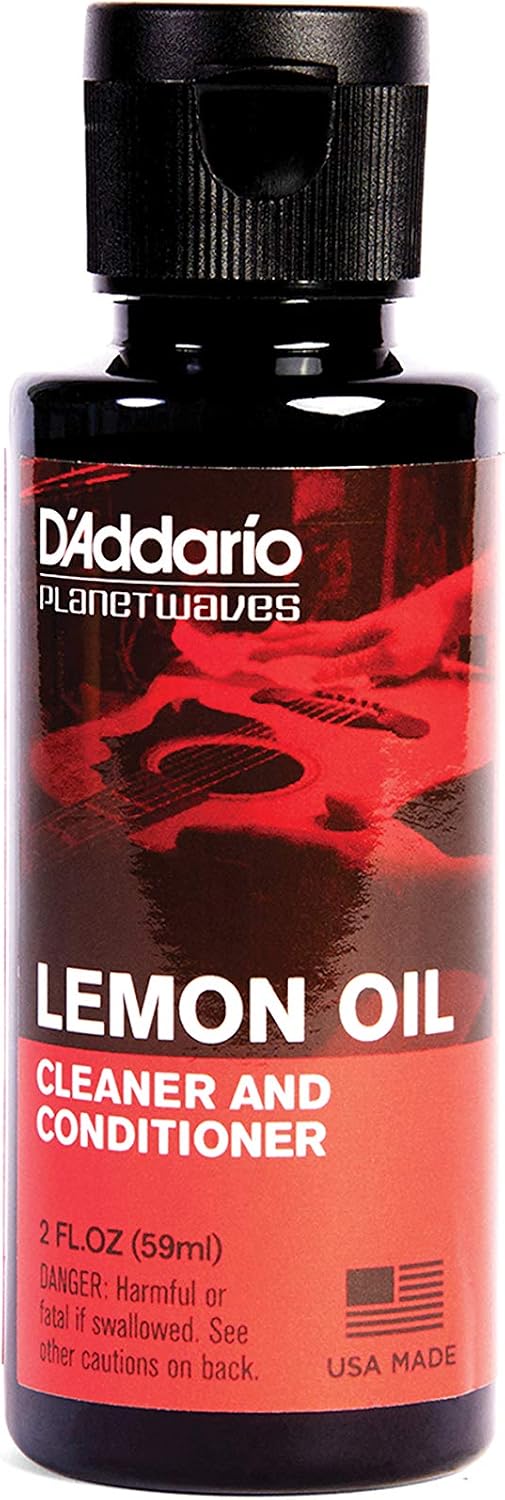
D’Addario Lemon Oil Fretboard Conditioner
Frequently asked questions
Does lemon oil actually contain lemon?
Usually not, and that is a good thing. Most products sold as lemon oil are mineral oil with a lemon scent added, and possibly a trace of real lemon oil for fragrance. Real lemon juice and concentrated lemon essential oil are acidic and can dry wood out or degrade it over time, which is the opposite of what you want. When a bottle says lemon oil, read it as lemon-scented conditioning oil, and never use household lemon juice from the kitchen.
Can I use olive oil on my fretboard?
Do not. Olive oil, vegetable oil and most food oils go rancid and polymerise over time, which means they turn gummy, sticky and eventually smelly on your fretboard, and they are hard to remove once they have soaked in. Stick to a dedicated fretboard conditioner, which is a light mineral oil that stays stable and will not spoil.
How do I tell if my fretboard is finished?
Look at the wood. If the surface is shiny, glossy or looks like it has a clear coating over it, it is finished, and that almost always means maple. If the wood looks matte and you can feel the grain, it is bare and unfinished, which is typical of rosewood, ebony and pau ferro. Another quick check: finished boards rarely darken or dry out the way bare wood does, because the finish seals them. When in doubt, do not oil, and ask a tech.
Do I need to clean the fretboard before I oil it?
Yes, always. Oiling over dirt just pushes it into the grain and locks it in under a layer of oil. Wipe the board clean first, and if it has built-up grime along the frets, use a dedicated fretboard cleaner or a barely damp cloth and let it dry fully before you apply any oil.
How much lemon oil should I use?
For a typical lemon oil guitar fretboard job, a few drops on a cloth is enough for a whole fretboard. If you can see oil sitting on the surface after you have worked it in, you have used too much. Put the drops on the cloth rather than the board, and make sure you wipe the board dry before you finish.
Will lemon oil darken my fretboard?
It deepens the colour rather than dyeing it. A dry board looks pale and grey, and oil brings back the darker tone that was always there underneath. It will not turn a light wood dark, and it will not change a finished board at all.
Can lemon oil fix a cracked or worn fretboard?
No, and it is worth being clear about that. It keeps a healthy board healthy and slows future drying, but it cannot close cracks, fill worn finger grooves or level divots. Those are jobs for a repair tech, and oiling a damaged board only helps by preventing the damage getting worse.
*As an Amazon Associate, I earn from qualifying purchases. Links on this page are affiliate links, marked with rel=”sponsored”.*