
The best acoustic guitar strings for most players are light-gauge phosphor bronze sets from Elixir, D’Addario or Ernie Ball. A 12-53 phosphor bronze set is the safe middle ground of the acoustic world: warm enough for fingerpicking, bright enough for strumming, and comfortable enough for a long evening of practice. Everything that follows is really about working out when to step away from that default.
Acoustic strings matter more than they get credit for. They are the only part of the instrument you replace regularly, and they shape both how the guitar feels under your fingers and how it sounds to everyone else. Fit the wrong set and even a lovely guitar can feel stiff and dull. Fit the right set and a modest guitar opens up. Here is what actually matters when you are shopping.
Phosphor bronze vs 80/20 bronze
The two big families of acoustic strings are both bronze alloys, and the difference comes down to how much zinc is mixed with the copper.
Phosphor bronze strings are roughly 92 percent copper and 8 percent tin, with a trace of phosphorus added. They are the warmer, darker option. The tone is balanced and smooth, with the bass notes rounded off rather than harsh. They also age fairly gracefully, losing their edge gradually instead of all at once. This is the default for most players, and it suits fingerpickers and singer-songwriters particularly well.
80/20 bronze strings are 80 percent copper and 20 percent zinc. They sound brighter and livelier straight out of the packet, with more zing on the top strings and a sharper attack. That sparkle is lovely when the strings are fresh, but it fades quicker, and 80/20 sets tend to oxidise and go dull faster than phosphor bronze, especially if your hands sweat. They are a good pick if you want maximum brightness and do not mind changing strings a little more often.
For a first decision, phosphor bronze is the safe bet. Reach for 80/20 when you know you want more cut and shimmer.
Coated vs uncoated
Coated strings carry a thin polymer layer over the winding that keeps sweat and grime out. Elixir made this approach famous, and it works: the coating slows corrosion dramatically, so the strings keep their tone for several times longer than a bare set.
The trade-off is that a coated set usually sounds a touch less lively than an uncoated one when both are brand new, and it costs more. Some players also say coated strings feel slightly slipperier under the fingers, but it is a small difference.
Uncoated strings are the traditional choice. They are cheaper, they sound full and natural from day one, and they are what most recordings are made with. The downside is lifespan. If you play every day or your hands sweat, an uncoated set can start to sound dead within a few weeks.
If you hate changing strings and want them to last, buy coated. If you want the truest tone and do not mind swapping more often, buy uncoated. There is no wrong answer, only a preference.
What gauge to choose
Gauge is the thickness of the strings, usually quoted by the diameter of the high E string in thousandths of an inch. A 12-53 set runs from a 0.012 inch high E down to a 0.053 inch low E. Thicker strings are louder and fuller but harder to press down; thinner strings are easier on the fingers but quieter.
Light, or 12-53, is the standard. It is what most guitars ship with from the factory and the sweet spot between tone and playability. If you are not sure, buy light gauge.
Extra-light, or 11-52, is the beginner’s friend. The strings bend and fret more easily, which is a genuine help while your fingertips are still building up. The sound is slightly thinner and the volume a shade lower, but for learning, comfort wins. Many beginners do far better starting here and moving up later.
Medium, or 13-56, is the heavy option. It puts more tension on the guitar, which means more volume, more low end, and a stiffer feel. Medium gauge suits players who strum hard or tune down, and it is popular with bluegrass players for that reason. It is also the hardest on your hands, so it is worth building up to rather than starting on.
Bear in mind that heavier strings pull harder on the neck, so changing gauges a lot may call for a small setup tweak.
The sets worth buying
You do not need a wall of options. Three brands cover almost everything a player needs.
Elixir is the name most people think of for coated strings, and for good reason. Their Nanoweb-coated phosphor bronze sets last noticeably longer than bare strings and still sound warm and full. If longevity is your priority and you would rather play than restring, this is the obvious choice.
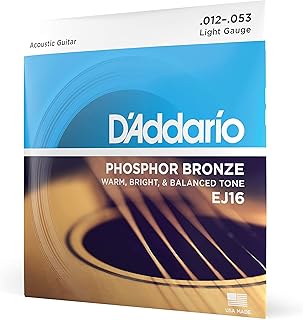
D’Addario EJ16 is the reference set. It is a phosphor bronze 12-53 light gauge and it has been the baseline against which everything else is judged for decades. Neutral, consistent, and affordable, it is the ideal first set if you are unsure and the sensible default for everyday use.
Ernie Ball Earthwood phosphor bronze is the other great all-rounder. The tone is warm and slightly round, the price is fair, and the brand has a loyal following among players who like a slightly softer, more comfortable feel. As a light 12-53 set it sits happily alongside the other two.
Any of these three will serve you well. Pick Elixir for lifespan, D’Addario for a safe standard, and Ernie Ball for a warm, easy-playing alternative.
Recommended gear


Frequently asked questions
How often should I change my acoustic guitar strings?
That depends on how much you play and how much you sweat. A heavy player might change uncoated strings every few weeks, while a casual player can get a few months from a set. A good rule is to change them when they stop holding tune, feel rough or grimy, or lose their sparkle. Coated strings stretch that timeline considerably.
Are coated strings worth the extra money?
For most people, yes, if longevity matters to you. They cost more per set but last several times longer, so the cost per hour of playing is often lower, and you spend less time restringing. The only real downside is a marginally less lively tone when brand new, which most players stop noticing after a day or two.
What gauge is best for a beginner?
Extra-light, or 11-52. The lower tension makes chords and single notes easier to fret while your fingers are still getting strong. You can move up to the standard 12-53 once playing feels comfortable. Light 12-53 is also fine for beginners with decent hand strength, but if in doubt, start lighter.
Can I use electric guitar strings on an acoustic?
No. Electric strings are wound with nickel or steel and are designed to work with magnetic pickups, not to drive a wooden soundboard. On an acoustic they sound thin, quiet and characterless. Stick with bronze or phosphor bronze strings made specifically for acoustic guitars.
If you are still choosing a guitar to go with those strings, our [guitar comparison guide](/compare-guitars/) walks through the options side by side.
Disclosure: As an Amazon Associate, I earn from qualifying purchases made through links on this page, at no additional cost to you.