
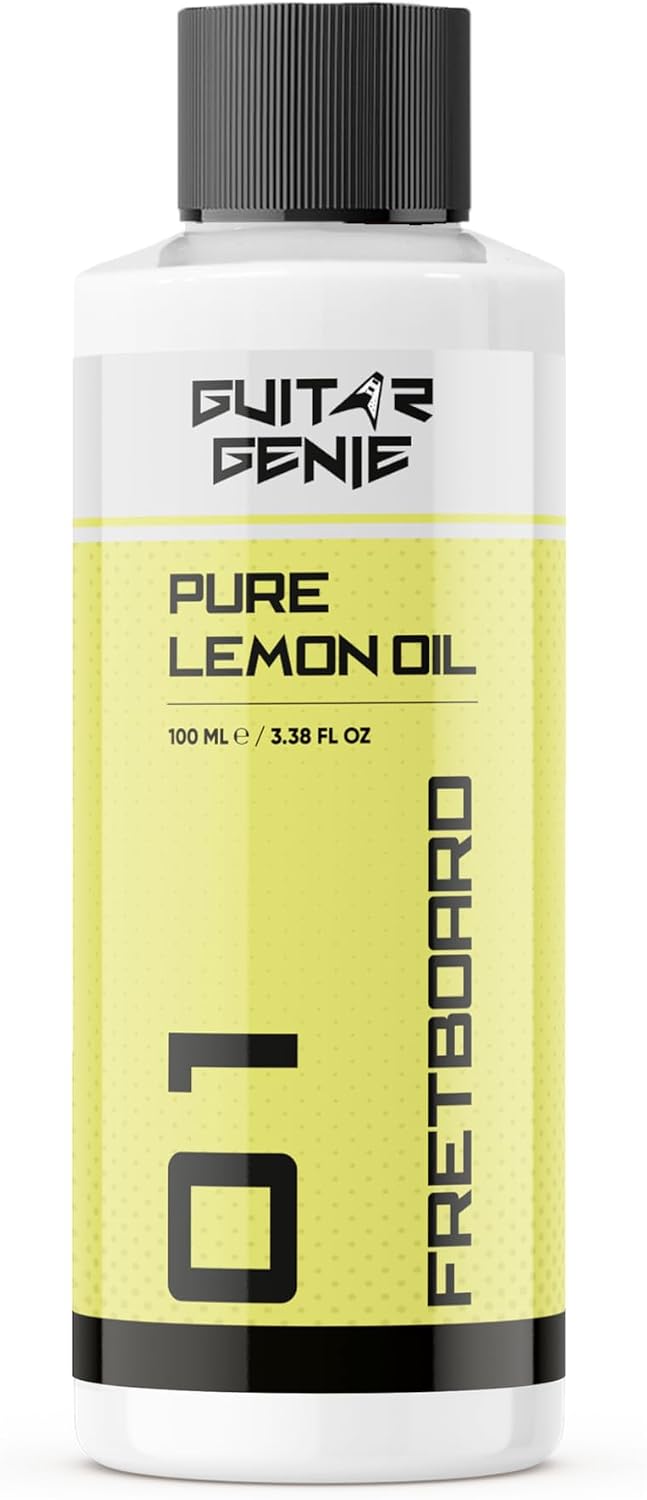
Knowing how to clean a guitar fretboard is a five-minute job that keeps the neck playing smoothly and stops finger grime hardening into gunk, and the right method depends on whether your board is unfinished rosewood or finished maple. A dark, open-pored board like rosewood or ebony takes a light conditioning oil once or twice a year, while a lacquered maple board needs nothing more than a wipe with a soft cloth. This guide walks through both, so you clean without drying out or dulling the wood.
Rosewood and ebony: the lemon-oil method
Unfinished dark fretboards such as rosewood, ebony and pau ferro are porous. They soak up finger oil and grime, and over time they dry out and take on a grey, tired look. These are the boards that benefit from a little fretboard conditioner, and the classic choice is a fretboard lemon oil.
The method is simple. Loosen the strings and push them aside, or remove them entirely if they are due for a change anyway. Put a few drops of lemon oil on a soft cloth, never pour it straight onto the wood, and rub it into the board along the grain, one fret space at a time. Let it sit for a minute or two, then wipe away every trace of excess with a clean, dry microfibre cloth.
The key is to go light. A small amount lifts the grime and feeds the wood; a heavy soak pools on the surface, dulls the board and attracts more dirt. Once or twice a year is enough for most guitars.
Maple boards: clean, never oil
Most Fender-style maple necks are finished in clear lacquer, which seals the wood completely. These should be treated like the body paint, wiped clean with a barely-damp cloth, never oiled. Oil on a lacquered maple board sits on the surface, turns gummy and can actually lift the finish over time.
If a finished maple board has stubborn marks, a tiny amount of mild, guitar-safe cleaner on a cloth does the job. The rule of thumb is straightforward: if the board looks shiny and sealed, no oil. If it looks open and woody, condition it.
How often should you clean it?
For a guitar that gets played regularly, a quick wipe-down after each session keeps most grime from ever building up. A fuller clean every few months is plenty, and conditioning oil on a dark board is a twice-a-year job at most.
The main thing is not to overdo it. Over-oiling is a common beginner mistake that softens the wood and makes the fretboard feel tacky. If the board looks healthy and dark, leave it alone.
What you need to clean a guitar fretboard
You do not need a workshop of products to clean a guitar fretboard properly, and most of what you do need is already in the cupboard. Here is the short list, and why each item earns its place.
The good news is that you can clean a guitar fretboard well with a handful of cheap items. A couple of soft microfibre cloths are the foundation. One lifts the grime, one buffs the board dry, and keeping them separate stops you smearing dirt back on. Microfibre works because the fine fibres trap dust and skin flakes rather than pushing them around the way an old cotton rag does. Buy a few and keep one set for the fretboard only, so it never picks up metal dust from elsewhere.
A soft-bristled brush is the next thing worth having. An old, clean toothbrush reaches along the edge of every fret, where grime collects in a thin line that a cloth sails straight over. Use it dry along the fret line and along the sides of the board where the finish meets the wood.
A dedicated fretboard cleaner handles the stubborn film on finished boards, and a bottle of fretboard conditioner or lemon oil handles the unfinished dark boards. Neither is expensive and both last for years, since you use so little at a time.
For polished, shiny frets, a set of best rated fret erasers removes corrosion and green tarnish without cutting into the metal. If you intend to tape off the board before working near the frets, a roll of best rated low tack masking tape peels off cleanly and will not pull at the finish.
Cleaning a rosewood or ebony fretboard step by step
This is the full sequence for a dark, unfinished board that has not been cleaned in a long while.
Start by slackening the strings and moving them out of the way, or take them off if they are near the end of their life anyway. Working with the board exposed makes the whole job easier and safer.
Wipe the board down with a dry cloth first, along the grain, from the nut to the last fret. This lifts loose dust and stops you grinding it into the wood with the next step.
Now deal with the grime that has packed against the frets. Run a dry soft brush along each fret line, or wrap a cloth around the edge of an old credit card and draw it gently along the wood right up against the fret. That line of hard, dark build-up is dried skin and oil, and it needs to come off before any conditioning.
With the board clean and dry, put a few drops of fretboard oil or lemon oil on a cloth, not on the wood, and work it in along the grain. A small bottle of best rated fretboard oil is plenty for a whole guitar.
Let it sit for a minute, then wipe the board dry with a clean cloth. It should end up looking richer and feeling dry to the touch, not slick. If it still feels wet, you used too much; wipe again.
Cleaning a maple fretboard without lifting the finish
A maple board with a clear finish is a different job, and the single most important rule is no oil and no abrasives.
Slacken the strings, move them aside, and give the board a wipe with a barely damp cloth. Lukewarm water on a microfibre is often all it needs. For fingerprints and general film, a small amount of guitar-safe cleaner on the cloth shifts it quickly.
The dirt that actually matters on a maple board sits hard against the frets and in the corners where the lacquer meets the metal. Use a dry soft brush for that, and a wooden or plastic scraper rather than anything metal. Never reach for wire wool, sandpaper or a scouring pad, because all of them will dull the lacquer and leave a patchy, scratched surface that no polish will hide.
If the finish has worn through to bare wood in the played areas, the rules change. A worn-through maple board is essentially bare wood, and it can be treated with a very small amount of oil, though most players leave it alone and accept the worn look as honest wear. Only oil bare wood, never lacquer.
What to do about really dirty fretboards
A board that has not been cleaned in years, or one bought second-hand from someone who played it hard, needs more than a wipe. The grime is usually baked on and hard, and there is often a rim of it along every fret.
The trick is patience rather than force. Work along one fret at a time with a dry brush and a plastic scraper, lifting the line of build-up before you go near it with a cloth. Warm the area slightly with your hand as you work; a little warmth helps the old oil and skin soften enough to lift.
For finished boards, a mild guitar-safe cleaner left on for a few seconds lifts the film without attacking the lacquer. For unfinished boards, the work is dry first, and only then a touch of oil. If the grime is genuinely stubborn, repeat the dry pass rather than soaking the board, because the answer to dirt is mechanical removal, not more product.
Once it is clean, an unplayed-looking board will often surprise you by turning much darker and richer. That colour was always there under the grime.
Cleaning the frets, edges and hardware while you are there
The fretboard does not exist in isolation, and a clean board with dirty frets still looks tired. Since you already have the strings out of the way, it is worth spending a few extra minutes.
Frets collect a dull grey film and, over time, green corrosion, especially where sweat sits under the strings. A light rub with a fret eraser or a fine polishing compound on a cloth brings the shine back and makes the whole neck feel smoother to play. Work along each fret, not across the board, and cover the wood with tape if you are using any paste, so it never touches the grain.
The edges of the board, where the wood meets the binding or the finish, gather a hard line of dirt that a flat cloth misses. Run a brush or a cloth wrapped around a card along that edge on both sides.
Check the nut at the top of the neck too. Those slots collect grime, and a quick clean with a soft brush, followed by a scrape of pencil graphite, keeps the strings moving freely and helps tuning stability. It is a small job that pays off every time you tune.
Cleaning a fretboard with the strings still on
You do not have to remove the strings to clean a fretboard, and for a regular clean it is quicker not to.
Slacken each string enough that you can push the whole set to one side of the neck, then work along the exposed half of the board. Clean and condition that side, then move the strings to the other side and do the rest. Use two fingers to hold the strings clear while you wipe, and take care that the cloth does not catch on a string end and pull it out of tune.
The one thing you cannot do with the strings on is reach the fret spaces directly under the strings, so leave the deep clean for a string change. A quick wipe this way every few weeks is plenty between full cleans, and it keeps the board from ever getting bad enough to need more.
Ebony, pau ferro, laurel and richlite: the other boards
Not every dark board behaves like rosewood, and knowing which one you have saves you from the wrong treatment.
Ebony is dense, tight-grained and naturally dark. It dries out more slowly than rosewood and needs oil even less often, maybe once a year or less. Over-oiling ebony can leave it looking greasy rather than rich, so go easy.
Pau ferro and laurel are the common substitutes on mid-priced guitars, used where rosewood supply and cost make it awkward. Both are open-pored and dark, and both take a light oil now and then just like rosewood. Pau ferro tends to be more orange-brown with streaks, and it can dry out faster than rosewood in a centrally heated room, so it is worth checking twice a year in winter.
Richlite is a synthetic composite made from paper and resin, used on some modern guitars. It is not wood at all, so it does not need oil and will not absorb it. Clean it with a damp cloth and leave the oil on the shelf.
When in doubt, the test is the same for all of them. If the surface looks matte and you can feel the grain, it is bare wood and can be conditioned lightly. If it looks glossy and sealed, it is finished and gets a wipe, not oil.
Cleaning a second-hand guitar for the first time
A guitar that has arrived from someone else carries two decades of somebody else’s sweat, and the fretboard is where it shows most. If you have never had to clean a guitar fretboard that was not yours, start slow and work in stages.
Give it a full clean before you play it properly, with the strings off if you are changing them anyway. Work the dry stages first, brush along the frets, then decide whether the board needs oil based on how it looks. Second-hand boards are often either bone dry from years in a case or over-oiled from an owner who liked the shine, and the two need opposite things.
While the strings are off, check the frets for wear. Flat spots under the top strings, or deep divots, mean the guitar will buzz no matter how well you clean it, and that is a fret dress rather than a cleaning job. A cheap second-hand guitar with worn frets is still worth buying, but you should know what it will cost to put right.
Finally, clean the whole instrument, not just the board. Dust and smoke residue collect in every gap, and a thorough first clean makes a used guitar feel like yours.
What not to put on a fretboard
The list of things that damage a fretboard is longer than the list of things that help it, and most of the damage comes from ordinary household products.
Household lemon juice, and real citrus essential oil, are acidic. They strip moisture and dry the wood out, which is the opposite of what you want, even though both are sold as lemon products. Food oils, including olive, vegetable, sunflower and baby oil, go rancid and polymerise, turning gummy and eventually smelly, and they are hard to remove once soaked in.
Furniture polish, wax sprays and all-purpose cleaners are built for sealed wood, not bare guitar boards, and they leave a smeary film that traps dust. Abrasive cleaners, scouring pads and wire wool will scratch a finished board and cut into bare wood.
Water is fine in tiny amounts on a barely-damp cloth, but never soak a board or let water sit in the fret slots, because it lifts finish and swells the wood. And alcohol and solvents strong enough to shift grime will also lift lacquer and dry the wood, so keep them off the neck entirely.
The safe short list is a dry cloth, a barely damp cloth, a soft brush, a guitar-safe cleaner, and a fretboard conditioner for unfinished boards. That is genuinely all you need.
Common mistakes that damage fretboards
The biggest one is using the wrong product. Household lemon juice and real citrus oil are acidic and will strip moisture from the wood, and food oils like olive oil go rancid and gum up the board. Abrasive household cleaners and polishes are just as bad.
The second mistake is over-application. Soaking the board in oil does not make it cleaner, it makes it worse. A few drops on a cloth, worked in gently, is all that is needed.
Finally, do not oil a finished maple neck. It is the single most common way people ruin an otherwise clean fretboard.
Recommended gear
Frequently asked questions
Can I clean a fretboard without removing the strings?
Yes. Loosen the strings and move them to the side of the neck, then clean and condition as normal. It is slightly more awkward than removing them, but perfectly fine for a quick clean.
Can I clean a fretboard without lemon oil?
Absolutely. A dry microfibre cloth removes most grime on its own, and a barely-damp cloth handles the rest. Oil is for conditioning dark, open-pored boards, not for everyday cleaning.
How often should I oil a rosewood fretboard?
Once or twice a year is enough for most guitars. If the board looks dry or grey, it is time; if it looks healthy and dark, leave it alone.
Is lemon oil safe for all fretboards?
No. It is safe for unfinished rosewood, ebony and similar dark woods, but not for lacquered maple boards, which should be cleaned without oil.
Can I use wire wool or a scouring pad on a fretboard?
Not on a finished board, and not to clean wood. Wire wool and scouring pads scratch lacquer and score bare wood, and the fine metal dust they leave behind can rust into the grain. If you need to shift hard grime, use a dry brush, a plastic scraper and patience instead.
What should I do if my fretboard feels tacky after oiling?
It means too much oil went on and has not been wiped off. Wipe the board firmly with a clean, dry cloth until it feels dry to the touch, and give it a day before deciding whether it needs anything else. Most of the time the answer is nothing more; the tackiness fades once the excess is gone.
Does cleaning a fretboard change how the guitar sounds?
Not in any real way, and anyone who tells you a new set of strings sounds better because of the oil is hearing the new strings. A clean board does make slides smoother and stops grime dulling the string where it crosses the frets, which helps a little, but the change is in feel more than tone.
Want to know what a guitar is actually worth before you invest in looking after it? Use our guitar valuation tool to see recent sold prices, live asking prices and current listings.
*As an Amazon Associate, I earn from qualifying purchases. Links on this page are affiliate links, marked with rel=”sponsored”.*