
As an eBay Partner, I may be compensated if you make a purchase.
Most used guitars for sale in the UK are listed on four places: eBay, Reverb, Facebook Marketplace and Gumtree, with the shops picking up the rest. eBay has the widest choice and the only buyer protection that reliably pays out, which is why it is where I would start for anything over a few hundred pounds. Facebook Marketplace and Gumtree are cheaper because nobody is paying seller fees, but you carry all the risk yourself. Shops cost the most and give you a warranty. Everything below is about picking the right one for the guitar you actually want, and about not paying over the odds once you have found it.
I have bought and sold a few hundred guitars over the years, mostly electrics in the 400 to 2,500 pound range, and the pattern has not changed much. The guitar is rarely the problem. The problem is paying a private asking price that was set against the highest hopeful listing on the internet rather than against what the model actually sells for.
The short answer
For a first used buy, use eBay with the right filters set and pay by card. Look at sold listings before you look at anything for sale. If you want a specific discontinued model and you are prepared to import, Reverb has better descriptions and better photographs. If you want the lowest price and you know what you are doing, Facebook Marketplace and Gumtree are where the bargains sit. If the guitar costs more than about 800 pounds and you cannot inspect it in person, buy from a shop and treat the extra 20 percent as the price of a warranty and a return address.
eBay: the biggest choice of used guitars for sale in the UK
eBay is where the volume is, and volume is what gives you a realistic price. A model that turns up twice a month on Facebook turns up ten times a week on eBay, which means you can afford to be picky and wait for the right one.
Set the filters before you browse, because the default results are full of trade sellers charging retail money for battered stock:
- Condition: Used, and read the item description rather than the condition label. “Used” on eBay covers everything from a case queen to a guitar that has been gigged for a decade.
- Location: UK only. This removes the entire category of listings that look cheap until you add 20 percent VAT and a handling fee at the border.
- Returns accepted. A seller who will not accept a return on a 900 pound guitar is telling you something.
- Seller feedback of 98 percent or better, and read the negative feedback rather than the score. One bad review about packing is worth more than two hundred good ones about postage speed.
- Sold items, for pricing. Search the model, then filter to sold and completed listings. That list is the real market. The active listings are the daydreams.
The reason eBay is the safe starting point is the Money Back Guarantee. If the guitar does not arrive, arrives damaged, or is significantly not as described, you can open a case and get your money back, and you have 30 days from delivery to do it. That matters more than most buyers realise, because on a private sale the Consumer Rights Act 2015 does not apply. A private seller on eBay owes you an honest description and not much else, so the guarantee is doing the heavy lifting.
Two habits that save money. First, save the search with your filters and let the notifications come to you, because good listings at fair prices sell in hours and the ones that sit for a fortnight are sitting for a reason. Second, use Best Offer on anything that has been listed for more than three weeks. A guitar with 300 views and no sale is a seller who is starting to think about their price.
Photographs are where you do your checking. Stock catalogue shots on a used listing mean the seller has not photographed the actual guitar, so ask for pictures of the back of the headstock, the heel, the fret wear at the first three frets, and the serial number. A seller who cannot be bothered to send four phone pictures before a 900 pound sale will not be helpful after it.
Reverb: better detail, thinner UK stock
Reverb was built for musicians selling to musicians, and it shows. Listings are long, photographs are numerous, and sellers usually know the difference between a reissue and an original. If you are chasing a specific year or a discontinued colour, Reverb will have it when eBay does not.
The catch is geography. Reverb’s centre of gravity is the United States, so a large share of the listings you find are not in the UK. Anything coming from outside the country attracts 20 percent VAT on the total including shipping, plus duty on some categories, plus a courier handling charge that is usually between 8 and 15 pounds. A 700 pound guitar from a US seller can land at 900 pounds without trying. Filter to UK and EU sellers, or accept that the landed price is the price.
Reverb does have buyer protection, and in my experience the disputes are handled sensibly, but you are still dealing with a marketplace where the seller sets the description. Read the whole “about this item” section, not just the first line. Words like “player grade”, “honest wear” and “some checking” are doing a lot of work in those descriptions.
Facebook Marketplace and Gumtree: cheapest, and all your own risk
Neither charges a fee, so sellers do not have to build a fee into their price. That is why the same 2016 Mexican Stratocaster is 450 pounds on Marketplace and 550 pounds on eBay. You are being paid 100 pounds to take on the risk, and sometimes that is a good trade.
There is no buyer protection on either platform. No guarantee, no mediation, no refund. Cash on collection, in person, is the only way to do it, and the guitar should be in your hands before any money moves.
The scam patterns are consistent enough to list:
- A price well under market with a story attached. “It was my late father’s”, “I am moving abroad next week”, “my partner is selling it for me”.
- Any request for a deposit by bank transfer to “hold” the guitar. This is always a scam, without exception.
- A seller who will not meet at their home or let you see the guitar plugged in. “It is at my brother’s place” means you will never see it.
- Courier arrangements invented by the seller, or a link to a “shipping agent”. Both are ways of getting you to pay outside the platform.
- A brand new account with a bargain and no history.
Do the deal in daylight, take someone with you, and take a small amp or a headphone amp so you can hear the electrics and the pots. If a seller is offended by you wanting to plug it in, that is your answer.
One more thing worth doing on a private sale: ask for the serial number in a message before you travel, and check it against the model’s dating reference. It is a two minute job and it settles whether the guitar is what the listing says it is. If the seller will not send it, walk away.
Guitar shops and second hand dealers
The specialist shops have all worked out that used stock is profitable, so most of them now run a serious pre-owned section: guitarguitar, Guitar Village in Farnham, Andertons, PMT, GuitarBitz and a long tail of local shops that never left the high street.
You will pay 15 to 25 percent more than a private seller would take, and in exchange you get a warranty, usually three months, a guitar that has already been set up, a returns window, and someone to complain to. On anything over 800 pounds, especially an acoustic where a lifted bridge or a dried out top is expensive, that is money well spent. On a 300 pound Squier, it usually is not.
Trade-ins are worth asking about even if you are not planning one. Shops will often move a used price by 10 percent if you are spending with them, and they will hold a guitar for a day while you decide, which private sellers rarely will.
Auction houses and pawnbrokers are the last stop. Fine vintage guitars do turn up at general auctions, and the buyers premium plus VAT usually adds 25 to 30 percent to the hammer price, which kills most of the apparent bargain. If you are not confident dating and valuing a guitar yourself, this is the worst possible place to learn.
What used guitars are actually worth
The gap between asking prices and sold prices is the single most expensive thing about buying used. Used guitars for sale are priced by sellers, not by the market, and sellers price against the highest hopeful listing they can find. On the big platforms that gap usually runs at 15 to 25 percent, and it is widest on the models people feel sentimental about.
Three things set the real number:
- Recent models in production. Expect 60 to 75 percent of the new street price, not the RRP. A guitar that sells new for 799 pounds with a case usually changes hands used for 480 to 580 pounds, depending on condition and colour.
- Discontinued models. These can beat the new price, because supply is fixed and the people who want one really want one. Japanese Fenders, early Mexican Standards, certain Gretsch and Yamaha models all behave like this.
- Anything with a repair. A well repaired headstock break takes roughly a third off. A refinished body takes more, because buyers assume something is being hidden.
Our guitar value checker shows recent sold figures next to live asking prices for the models people search for most, so you can see the gap on the exact guitar you are looking at rather than a rule of thumb. If the asking price is within about 10 percent of a realistic sold price and the guitar is sound, it is a fair deal. If it is 30 percent above, the guitar needs to be exceptional, and most are not. There is more on how condition and specification move the number in the second hand value guide.
Remember that seller fees are baked into eBay prices. A seller paying around a tenth of the sale price in fees needs a higher price to end up with the same money, so a Reverb or Marketplace listing at 10 percent below the eBay equivalent is not automatically the better deal. Compare what the seller takes home, not the sticker.
Ask these questions before you pay
A short message before you commit tells you whether the seller is straight, and it gives you a written record if something turns out to be wrong.
- What is the serial number?
- Has the headstock or neck ever been broken or repaired?
- Is the finish original? Has it been refinished, relic’d or touched up?
- Are the pickups, tuners and bridge original?
- How much fret material is left, and is there any buzzing anywhere on the neck?
- Does the truss rod turn freely in both directions?
- Has it been refinished or routed for a different pickup?
- Does it come with a case, the tremolo arm, and the paperwork?
Vague answers to the truss rod and the fret questions are the ones to worry about. A seller who says “I have never touched the truss rod” is fine. A seller who says “the truss rod is maxed out but it plays great” has just told you the neck is nearly done.
Paying safely
Pay by credit card wherever you can. Under Section 75 of the Consumer Credit Act, a credit card purchase over 100 pounds is jointly covered by the card issuer and the supplier, which means you have a second party to claim against when a seller vanishes. Debit cards do not have Section 75, but they do have chargeback, which is slower and less certain but still worth having.
On eBay, pay through eBay checkout. On Reverb, pay through Reverb. Wherever you are, PayPal Goods and Services is acceptable, and PayPal Friends and Family is not, because it removes your protection entirely.
Never pay by bank transfer, and never pay a deposit before you have seen the guitar. Plenty of used guitars for sale at a tempting price come with a story about paying outside the platform, and the story is always the same. Bank transfers are instant, irreversible and loved by fraudsters for exactly that reason. If a seller insists on one, the deal is over, however good the guitar looks.
Keep the listing, the messages and the photographs. If it comes to a claim, the description in the listing is the contract, and a screenshot of it is worth more than an argument.
Postage, packing and collection
A guitar in a cardboard box is a guitar waiting to be broken. If it is being posted, ask for it to be sent in a hard case or double boxed with the strings detuned, and make sure the value is insured. Most couriers exclude musical instruments from their standard compensation, so it is worth asking which service the seller is using and what the cover actually is.
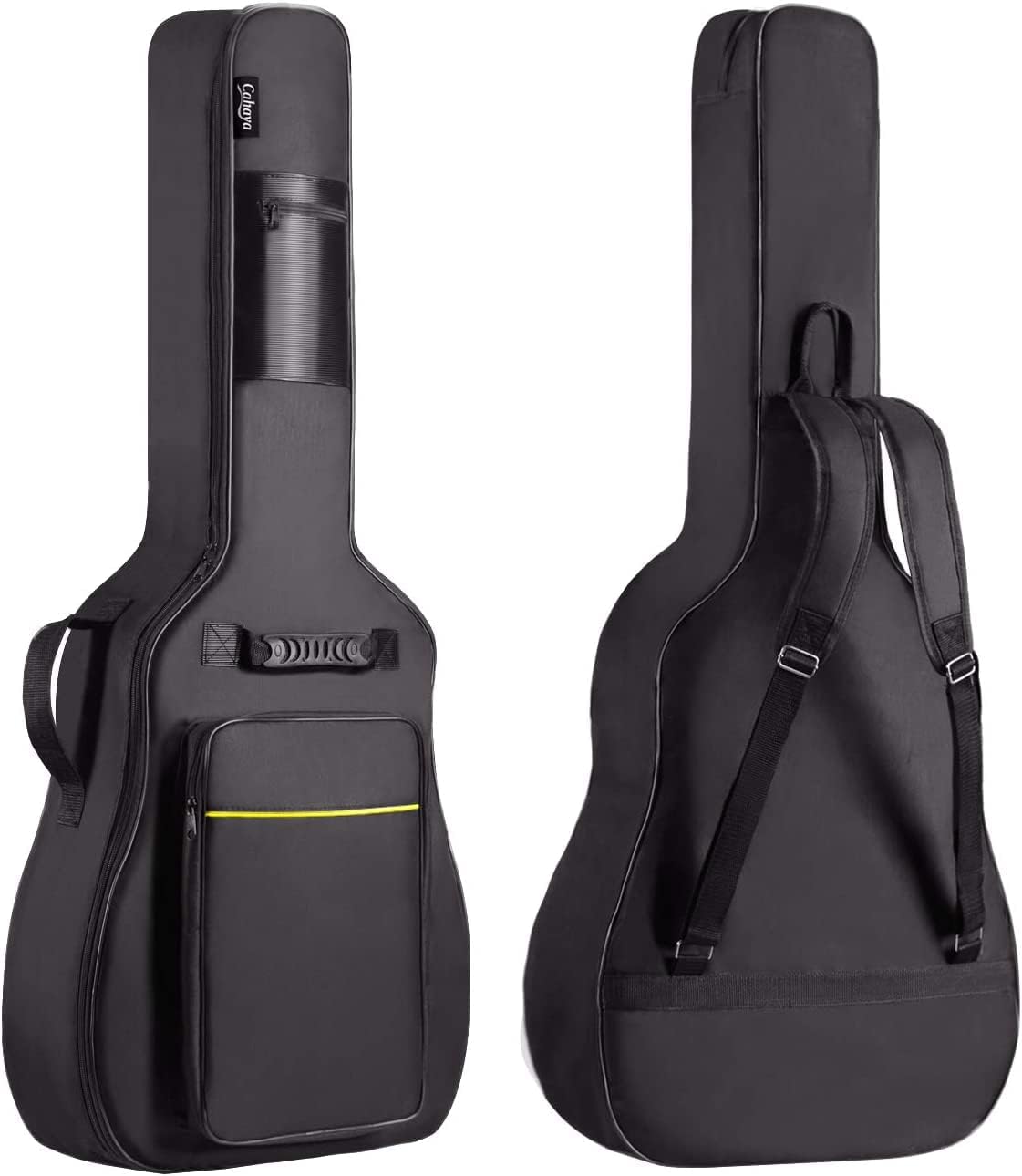
If you are collecting, take a best rated padded gig bag with you. It costs less than 25 pounds, it protects the guitar on the way home, and it means you are not carrying a 900 pound instrument through a car park in the open. For electrics the electric version fits most Strat and Les Paul shaped bodies.
Above about 500 pounds, collect in person if the distance is reasonable. A four hour round trip costs less than a bad surprise.
The first hour after it arrives
Give it a day to settle if it has travelled in cold weather, then work through this order. The guitar will have moved in transit, so a guitar that arrives slightly out of tune or with a raised action is normal rather than faulty.
- Tune it. A best rated clip-on tuner is quicker than a phone app and stays in the case.
- Check the neck relief with a capo at the first fret and a finger on the last fret, looking at the gap at the eighth fret. Roughly 0.2 to 0.3mm is right.
- Measure the action at the twelfth fret with a best rated string action gauge. Around 1.6 to 2.0mm on the low E for an electric, 2.0 to 2.8mm for an acoustic.
- Play every fret on every string, both clean and through an amp. Buzz on one fret is usually a high fret or a bad setup. Buzz everywhere means the neck needs relief.
- Check the electrics: scratchy volume and tone pots, a noisy switch, a loose output jack. All cheap to fix, all worth knowing about.
If the action is high, do not panic. Most used guitars arrive needing a tweak, and most of it you can do yourself: our guide to fixing high action and the full setup walkthrough cover the order of operations. A shop setup costs 40 to 70 pounds and transforms a guitar that felt wrong in the shop.
Then clean it. A used guitar carries someone else’s sweat and skin oils, and the fretboard in particular will be dry. A best rated guitar polish on the body and a wipe down of the board makes it feel like yours rather than theirs. Our guide to guitar polish and finishes explains which products are safe on nitrocellulose, which matters on older guitars.
What to budget on top of the price
A used guitar at a fair price is still not the end of the spending. On a 600 pound electric, budget another 60 to 110 pounds:
- Strings, 8 to 15 pounds. Assume the ones on it are dead.
- Setup, 40 to 70 pounds if you are not doing it yourself.
- Gig bag or case, 20 to 80 pounds if it does not come with one.
- Fretboard oil and polish, about 15 pounds, once every year or two.
- On an acoustic, a best rated soundhole humidifier, because a winter in a centrally heated house is what cracks tops. See our humidifier guide and the storage rules.
That is 10 to 15 percent on top of the purchase price. Fold it into your budget before you start looking, because it changes which guitars are actually in range.
Red flags that mean walk away
- A truss rod that will not turn, or is already at the end of its travel.
- A neck twist you can see when you sight down it.
- A lifting bridge on an acoustic, or a hump in the top behind the bridge.
- Fresh filler and overspray around the neck heel, which usually means a break.
- A refinished body on a guitar sold as original.
- A serial number that does not match the model or the year claimed.
- A seller who will not send photographs of the areas you asked about.
- Any pressure to pay quickly, outside the platform, or before viewing.
None of these is a reason to negotiate. They are reasons to close the tab.
Frequently asked questions
Is it safe to buy a used guitar on eBay?
It is as safe as any marketplace purchase gets, because the Money Back Guarantee covers items that do not arrive or are not as described, and you have 30 days from delivery to claim. Pay through eBay checkout, buy from sellers with 98 percent feedback or better who accept returns, and keep the listing description, because that is what a claim is judged against.
How much should I pay for a used guitar?
For a model still in production, expect 60 to 75 percent of the new street price in good condition. Deduct about a third for a repaired headstock break and more for a refinish. Check completed sold listings rather than asking prices, because the gap between the two is usually 15 to 25 percent.
Is it cheaper to buy a used guitar on Facebook Marketplace or eBay?
Marketplace is usually 10 to 20 percent cheaper because there are no seller fees, but there is no buyer protection at all. eBay costs more and gives you a refund route. For a guitar under about 300 pounds, the saving is worth the risk if you can inspect in person. Above that, eBay or a shop is the better trade.
Should I buy a used guitar without playing it first?
If it is from a shop with a warranty and returns, yes. From a private seller, only with photographs of the headstock, heel, frets and serial, answers to the truss rod question, and a payment method you can reverse. A guitar you have not played is a small gamble, and it is a much smaller one when you know what to check when it arrives.
Can I return a used guitar bought from a private seller?
Not by right, no. The Consumer Rights Act 2015 covers sales by traders, not private individuals, so a private sale is buyer beware unless the description was misleading. Your routes are the platform’s own protection scheme, a credit card claim under Section 75, or a debit card chargeback, which is why paying by card matters more than the 1 percent cash discount some sellers offer.
Recommended gear
- CAHAYA padded acoustic gig bag: cheap protection for collecting and storing a used acoustic or electro.
- CAHAYA padded electric gig bag: fits most Strat and Les Paul shaped bodies.
- Snark SN5X clip-on tuner: the fastest way to check tuning and intonation on a viewing.
- MusicNomad string action gauge: measures action and relief in numbers rather than guesses.
- Dunlop Formula 65 polish: safe on most finishes, including older nitro.
- D’Addario soundhole humidifier: keeps an acoustic at the humidity it was built for.
*As an Amazon Associate, I earn from qualifying purchases. Links on this page are affiliate links, marked with rel=”sponsored”.*